
Why Body Material Matters in Electromagnetic Flow Meters
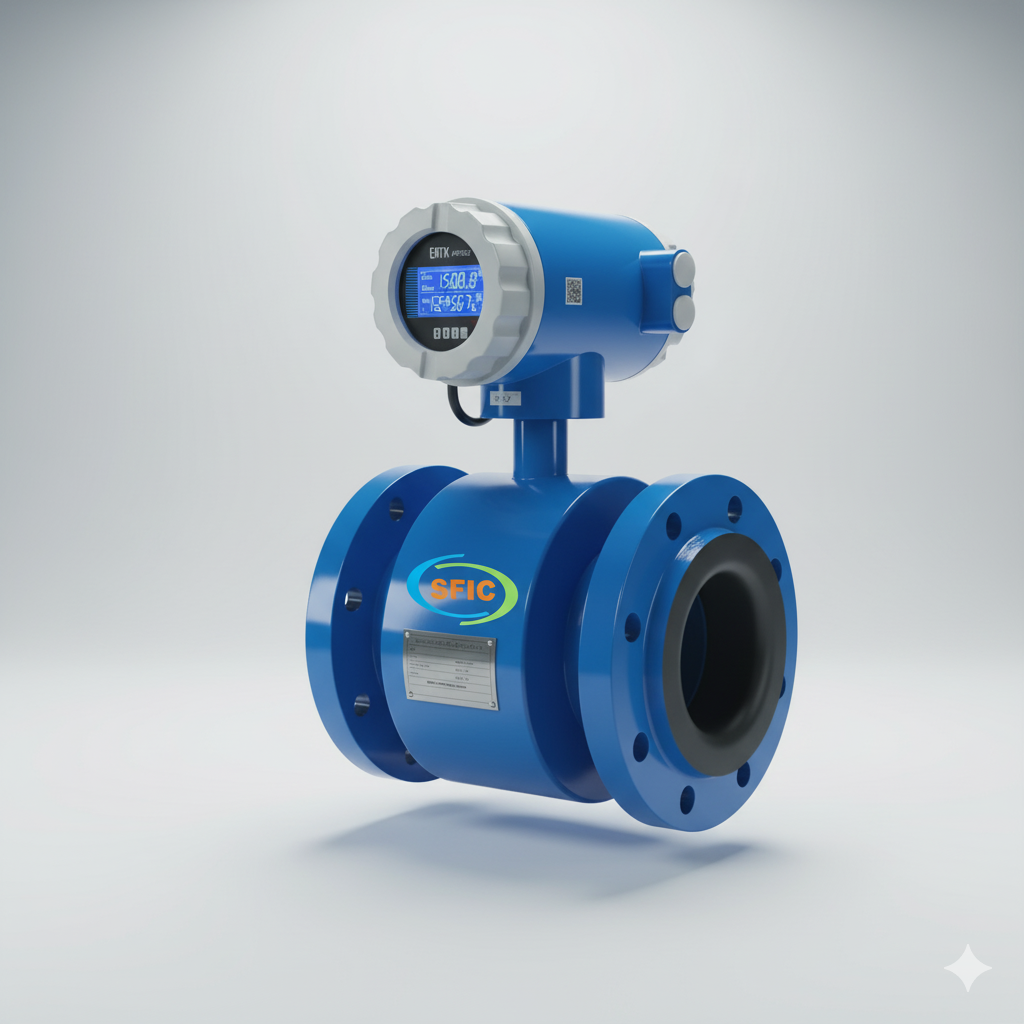
When selecting an electromagnetic flow meter for industrial or municipal applications, the body and lining material play a crucial role — affecting the durability, chemical compatibility, maintenance frequency, and overall life of the meter.
A “one-size-fits-all” flow meter does not exist. Depending on the fluid type (water, wastewater, chemicals, slurry), its corrosiveness, temperature, particle load, and the pipeline material — the right combination of body, liner, and electrodes must be selected for safe and reliable operation.
At Saitechflow, we provide SS (stainless steel), MS (mild steel), and Plastic-bodied electromagnetic flow meters — giving you flexibility to match your application requirements. Whether you need a robust stainless body for corrosive or industrial fluids, or a lightweight plastic body for cost-effective, clean-water systems, we manufacture and supply options suited for Indian conditions, from small farms to large chemical plants
Enquire Now
Overview of Electromagnetic Flow Meters — Core Advantages (Independent of Body Material)
Before diving into the body material differences, it’s useful to recap why electromagnetic (mag) flow meters are widely preferred for conductive liquids:
- Obstruction-free flow path & no moving parts: Since there’s no mechanical obstruction inside the meter, the fluid flows freely. This means the meter handles slurries, wastewater, sewage, pulp, and dirty water without clogging or high maintenance.
- Negligible pressure drop: Because the bore is unobstructed, these meters contribute almost no additional pressure head loss (only the straight-pipe length counts).
- Insensitive to fluid’s density, viscosity, temperature or pressure — as long as the fluid is conductive. This gives stable readings even when fluid properties vary.
- Bidirectional flow measurement — many electromagnetic meters can measure flow in both directions without modification.
- Suitable for aggressive or abrasive liquids (with proper lining/electrode selection) — thanks to lining and electrode material flexibility, mag meters handle acids, alkalis, wastewater, slurries, and even chemicals.
These core advantages make electromagnetic flow meters ideal for a variety of applications — from municipal water supply to chemical processing, wastewater treatment, food & beverage, and industrial utilities.
Why Use SS / MS / Plastic-Body Flow Meters — Choosing the Right Construction
Depending on your application’s fluid, operating conditions, and budget, you may opt for stainless-steel (SS), mild-steel (MS), or plastic-body electromagnetic flow meters. Each has specific advantages:
Stainless Steel (SS) Body Flow Meters
- High strength & durability — stainless steel body ensures robust construction, able to withstand pressure, mechanical stress, and environmental factors such as vibration or rough handling.
- Corrosion resistance & chemical compatibility — With proper lining (e.g., PTFE, rubber) and SS or corrosion-resistant electrodes (SS316, Hastelloy, Titanium, etc.), SS-bodied mag meters can handle a wide variety of corrosive or abrasive fluids — wastewater, sewage, acids, chemical solutions, slurries — without corrosion or degradation.
- Longevity and low maintenance — Stainless body resists wear over time, ensuring long operational life with minimal maintenance.
- Versatility across industries — Suitable for industrial water systems, chemical plants, wastewater treatment plants, food-grade (with appropriate liners/electrodes), mining, pulp & paper, etc.
Because of these qualities, SS-bodied electromagnetic flow meters are often the preferred choice where durability, chemical resistance, or harsh operating conditions are expected.
Mild Steel (MS) Body Flow Meters
- Cost-effective alternative — For applications involving relatively benign fluids (e.g., general industrial water, non-corrosive wastewater), MS bodies provide an economical flow meter option.
- Suitable for moderately aggressive fluids (with proper lining) — With rubber or plastic lining and compatible electrodes, MS-body mag meters can be used for water, wastewater, slurry, and other moderately challenging fluids.
- Good for large-diameter or heavy-duty pipelines — When cost matters and fluid aggressiveness is moderate, MS bodies offer a balanced solution.
Plastic / Lined Body Flow Meters
Plastic or lined-body electromagnetic flow meters (using polypropylene, FRP, or plastic-lined tubes) are advantageous when:
- Corrosion from minerals or chemicals is a concern, but weight, cost, or non-metallic piping compatibility is more important. For example, plastic-bodied mag meters are widely used for chemical dosing, fertilizer — where metal corrosion is a risk.
- Lightweight and easy installation are needed — Plastic bodies are much lighter than metal, making installation and handling easier, especially in retrofit or confined-space applications.
- Cost-sensitive applications — Plastic-bodied meters generally cost less than metal-bodied equivalents while still offering electromagnetic flow meter advantages: no moving parts, minimal maintenance, and plastic compatibility with certain chemicals and fertilizers.
- Corrosive, chemical or aggressive media — With proper lining (e.g., PTFE, PFA) and electrode selection, plastic-body meters are suitable for corrosive chemicals, acids, alkalis, or fertilizers.
Plastic-bodied electromagnetic flow meters are especially useful for water treatment, chemical dosing, agricultural water systems, small-to-medium industrial plants, and where metal piping may be avoided.
Liner & Electrode Selection — Tailoring Flow Meters to Fluid Type
To ensure accurate measurement and long-term durability, flow meters must be configured with correct liner and electrode materials depending on the fluid. Saitechflow helps you select the right combination for your application.
Common Lining Materials & Their Uses
Liner | Typical Application | Advantages |
Rubber / Neoprene / NBR | Water, wastewater, sewage, slurries | Good wear resistance for particles; cost-effective flow-meter.cc+1 |
PTFE / PFA / Fluoroplastic | Corrosive chemicals, acids, alkalis, chemical dosing lines, food/pharma | Excellent chemical resistance and smooth surface for sanitary applications fine-tek.com+2artang.com+2 |
Polyurethane / Hard Rubber | Abrasive slurries, mining wastewater, sand-laden fluids | Good abrasion resistance and moderate chemical protection flow-meter.cc+1 |
Electrode Material Choices
- SS316 / Stainless Steel: Suitable for clean water, wastewater, mild chemicals — default choice for most general applications. prismatech.ir+1
- Hastelloy, Titanium, Tantalum: For aggressive chemicals, strong acids/alkalis, seawater, corrosive or highly oxidizing fluids. fine-tek.com+2sdflowmeter.com+2
By combining appropriate body + lining + electrode materials, Saitechflow ensures your flow meter performs reliably in varied conditions — from municipal water to industrial chemicals, from wastewater to slurry.
Typical Specifications & Configurations — What Saitechflow Offers
Saitechflow’s SS/MS/Plastic-bodied electromagnetic flow meters come with flexible configurations tailored for diverse industry needs. Typical offerings include:
- Pipe size range: from small bore (e.g. DN 15 / ½″) to large industrial sizes (DN up to 600 mm or more) depending on requirement and custom order.
- Body material: Stainless Steel (SS304 / SS316), Mild Steel (MS) with internal lining, or Plastic-bodied (polypropylene / FRP / lined plastic) versions.
- Liner options: Neoprene/Rubber, Hard Rubber, PTFE, PFA, etc.
- Electrode material: SS316, Hastelloy, Titanium, Tantalum (based on fluid corrosiveness).
- End connections: Flanged (ANSI / DIN / IS), Wafer / Lined-in-pipe, as per pipeline standard.
- Output & electronics: 4-20 mA, pulse, Modbus/RS-485, HART, digital display, remote-mount transmitter, battery-powered or mains power, depending on application.
- Protection class: IP65 / IP67 / IP68 (sensor/transmitter), suitable for industrial environmental exposure.
- Accuracy & reliability: High-accuracy flow measurement (typ. ±0.5–1%), stable output even for slurry, wastewater, or industrial fluids.
Because of this flexibility, Saitechflow can supply standard off-the-shelf meters or custom-engineered solutions — depending on fluid type, pipeline size, connection type, and application.
Applications — Where SS/MS/Plastic-Body Electromagnetic Flow Meters Are Used
Thanks to their versatility, electromagnetic flow meters with various body/lining materials are suitable for a broad range of industries and applications:
- Municipal and Industrial Water Supply & Distribution: Clean water, raw water, treated water, DM water, utility water systems — using either plastic or stainless steel body meters depending on water quality and pipeline material.
- Wastewater Treatment Plants (ETP / STP): For sewage, wastewater, industrial effluent, slurry — rubber-lined SS or plastic body meters are ideal.
- Chemical & Process Industries: Handling corrosive, acidic, alkaline, or chemical-laden fluids — PTFE / PFA lined SS-body mag meters provide chemical resistance and measurement accuracy.
- Food, Beverage & Pharma: For sanitary water, chemicals, cleaning water (CIP), etc. — plastic-lined or SS-lined meters with hygienic electrodes are suitable.
- Mining, Slurry, Pulp & Paper: For abrasive slurries, mud, pulp — rubber or polyurethane lined SS/plastic body mag meters offer abrasion resistance and stable flow measurement.
- Agriculture & Irrigation: For water distribution, slurry fertilizer, irrigation systems — plastic-body meters offer cost-effective, corrosion-resistant flow measurement.
- Industrial Utility Systems: Cooling water, boiler feed, process water, chemical dosing, general utility water — SS / lined plastic mag meters deliver robust performance.
Wherever conductive liquids need to be measured reliably — from clean water to harsh chemicals — Saitechflow’s range of body-material options ensures you get the right meter for the job.
Why Saitechflow Is Your Trusted Manufacturer & Supplier in Pune, India
✔ Local manufacturing for Indian environment & plumbing standards
Saitechflow is based in Pune, India — we understand Indian water quality, wastewater composition, chemical usage patterns, and industrial pipeline standards. Our meters are designed accordingly — ensuring compatibility, durability, and long-term reliability in Indian conditions.
✔ Flexible customization — body, liner, electrode and electronics
Depending on your fluid, required durability or chemical resistance, we can deliver SS, MS, or plastic-bodied meters; select appropriate lining and electrode material; provide output and transmitter options; and tailor designs to meet your exact process needs.
✔ Quality, calibration, and documentation guarantee
Every meter supplied by Saitechflow undergoes factory calibration, quality tests, and is delivered with documentation. We also offer after-sales support, calibration services, and maintenance as needed.
✔ Competitive pricing and faster turn-around
Because manufacturing is local and tailored, we are able to keep costs competitive without compromising quality — and deliver faster compared to imported meters.
✔ Wide sector coverage
Whether you are in municipal water, wastewater, chemical, food & beverage, mining, agriculture, or general manufacturing — Saitechflow’s SS/MS/plastic-body mag meters meet diverse requirements across sectors.
Installation & Maintenance Best Practices for SS/MS/Plastic-Body EMF Meters
To ensure accurate and long-lasting performance, proper installation and maintenance are essential. Saitechflow recommends the following guidelines:
- Ensure full-pipe flow — the pipeline must always be completely filled during operation; avoid air pockets or partially-filled pipes.
- Use correct liner & electrode material for fluid — consult with us regarding fluid type (chemical, slurry, wastewater) so we can recommend the right liner and electrode for corrosion and abrasion resistance.
- Provide adequate straight-pipe runs — upstream/downstream pipe lengths as per standards (usually 5×D upstream, 3×D downstream) for stable flow measurement; though with electromagnetic meters, requirements are less stringent due to no moving parts.
- Ensure proper grounding — especially when measuring conductive fluids; proper earthing avoids signal distortion or interference.
- Avoid mechanical stress on meter body & flanges — ensure flanges are aligned, bolts are evenly tightened; avoid pipe strain to prevent damage to lining or body.
- Periodic inspection and cleaning — though mag meters are low maintenance, regular checks (lining wear, electrode condition, wiring, grounding) help maintain accuracy over years.
- Calibration & verification as required — especially in critical applications (wastewater discharge, billing, chemical dosing) to ensure compliance and accuracy.
Saitechflow provides installation guidance, commissioning support, calibration services, and spare parts — ensuring your investment gives reliable performance for years.
Frequently Asked Questions (FAQ)
- Why choose stainless steel body over plastic body for a flow meter?
A. Stainless steel bodies offer superior mechanical strength, pressure resistance, and long-term durability. They are ideal for industrial, chemical, and corrosive environments where metal robustness and chemical resistance (with proper lining) are required. Plastic bodies are lighter and cheaper but may not withstand high pressure or mechanical stress. - Can plastic-bodied electromagnetic flow meters handle corrosive or chemical fluids?
A. Yes — if properly lined (PTFE / PFA / fluoroplastic) and equipped with suitable electrodes (stainless steel, Hastelloy, etc.), plastic-bodied mag meters can handle corrosive chemicals, fertilizers, acidic/alkaline solutions. However, fluid compatibility and operating conditions (temperature, pressure) must be validated. - Are electromagnetic flow meters suitable for wastewater, sludge or slurry?
A. Absolutely — because mag meters have no moving parts, unobstructed flow path, and liners/electrodes can be selected for abrasion resistance, they perform well even with wastewater, sewage, sludge or slurry containing particles. - Do plastic-bodied mag meters provide same accuracy as SS-bodied ones?
A. Yes — the core measuring principle (Faraday’s law) doesn’t depend on body material. With correct lining and electrodes, plastic-bodied meters provide comparable accuracy, provided installation and fluid conditions are right. - What pipe sizes and flow ranges are supported?
A. Saitechflow offers a wide range: from small bore (DN 15 / ½″) up to large bore (DN 600 and above), subject to customer requirements. Smaller pipe sizes and lower flow rates are well suited to plastic-bodied meters, while larger pipelines or industrial water/chemical lines often use SS / lined meters.
Closing Summary
Selecting the right electromagnetic flow meter isn’t just about the measuring principle — the body material, lining, electrode, and configuration must match the fluid, environment and application.
At Saitechflow, we provide a full spectrum of SS, MS, and Plastic-bodied Electromagnetic Flow Meters, engineered and manufactured in Pune, India — combining accuracy, durability, chemical resistance, and cost-effectiveness.
Whether you’re dealing with clean water, wastewater, chemicals, slurry, food-grade fluids or industrial utility lines — we have a solution tailored for you.
Contact Saitechflow today for a custom quotation, technical consultation, or to order your SS / Plastic-Body Electromagnetic Flow Meter — built for Indian industry needs.

