
The Critical Need for Accurate Effluent & Wastewater Flow Measurement
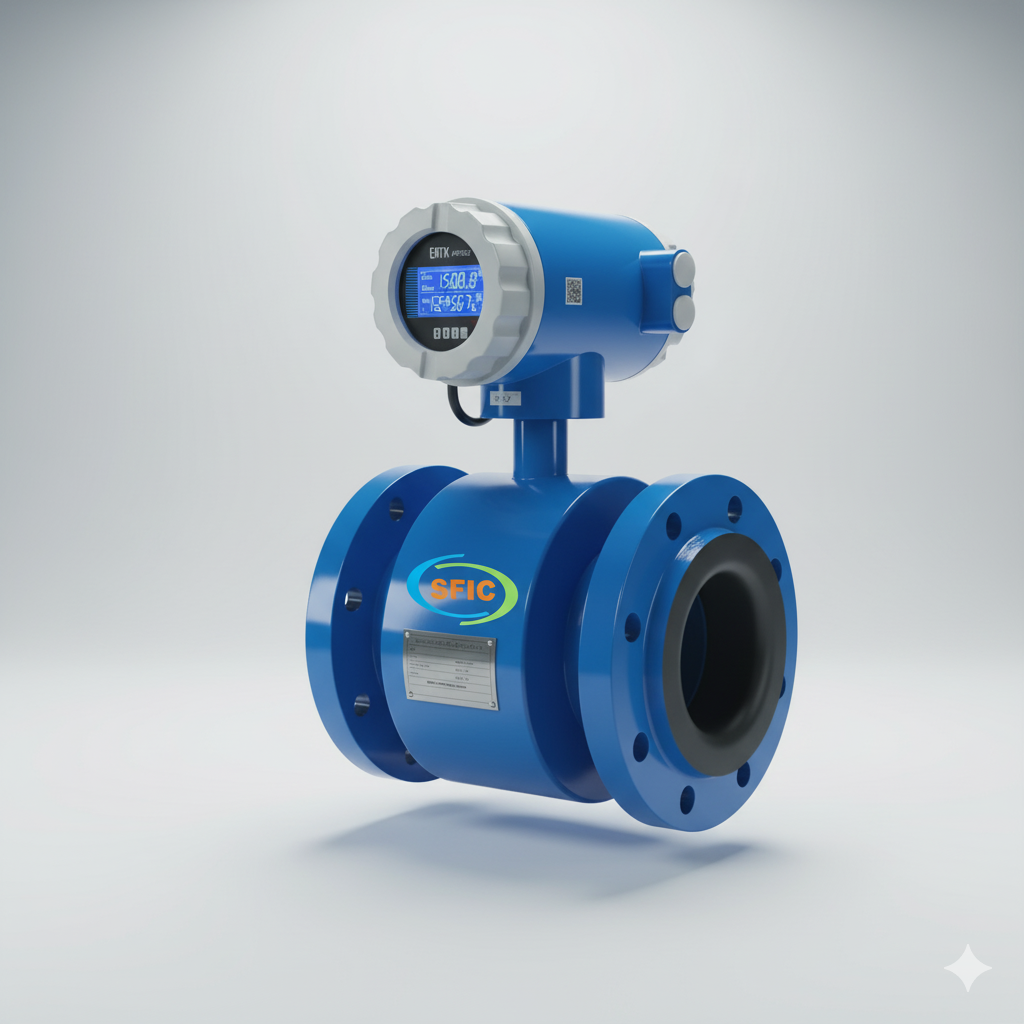
In a world where water conservation, regulatory compliance, and environmental responsibility are increasingly important, accurately measuring effluent, sewage, wastewater, and treated discharge has become absolutely essential. Whether it’s a municipal sewage treatment plant (STP), industrial effluent treatment plant (ETP), wastewater discharge line, or sludge and mixed-liquid transfer, knowing the precise flow is vital for:
- Regulatory compliance and discharge reporting
- Efficient wastewater treatment and chemical dosing control
- Monitoring sludge, sewage, and effluent volumes for treatment capacity planning
- Water resource management, recycling, and reuse operations
- Preventing overflow, leak detection, and ensuring safe discharge
That’s where electromagnetic (mag) flow meters from Saitechflow come in — designed especially for challenging effluent, sewage, sludge, and wastewater environments across STP, ETP and industrial plants in India.
Enquire Now
Why Electromagnetic Flow Meters are Ideal for Effluent / STP / ETP Applications
✅ Robust Against Solids, Sludge & Suspended Particles
Wastewater and effluent often contain suspended solids, sludge, grit, fibres, and mixed-liquid waste. Traditional mechanical flow meters — with rotors, pistons or orifices — are prone to clogging, wear, and frequent maintenance. In contrast, electromagnetic flow meters have no moving parts and offer an unobstructed, full-bore flow path, enabling even sludge, sewage, or treated wastewater with particles to pass smoothly.
✅ High Accuracy & Reliability in Variable Conditions
Mag meters accurately measure volumetric flow based on electromagnetic induction — unaffected by fluid density, viscosity, temperature, or pressure fluctuations. That’s crucial when wastewater composition, conductivity, or suspended solids content vary widely.
Typical accuracy of ± 0.5% (or better) ensures reliable data for regulatory compliance, billing, process monitoring or chemical dosing.
✅ Minimal Maintenance & Better Long-Term Performance
Because there are no moving parts or internal obstructions, electromagnetic flow meters avoid mechanical wear, clogging, or blockage even in harsh wastewater environments. This means much lower maintenance compared to mechanical or obstruction-based meters.
Liners and electrodes can be chosen to resist chemical, abrasive, or corrosive wastewater—giving long operational life and reliability.
✅ Energy & Pressure Loss Minimization
Full-bore design ensures that the fluid flows without obstruction — leading to negligible pressure drop or head loss. This is particularly beneficial in gravity-fed sewage lines, low-pressure wastewater pipelines, and pumping systems, helping reduce energy consumption and pump wear.
✅ Wide Rangeability & Adaptability
Wastewater flow can vary widely — during low-load periods, heavy inflow, sludge recirculation, or peak discharge. Electromagnetic flow meters come with a wide turndown ratio and can accurately register very low to high flow velocities, enabling stable measurements across varying flow conditions.
✅ Automation & Integration Friendly
Modern mag meters support standard industrial outputs — 4–20 mA, pulse, RS-485 / Modbus, HART, and even digital telemetry/SCADA integration. This allows real-time monitoring, data logging, remote control — which is especially useful in large STPs/ETPs, multi-tank systems, or remote facilities.
Working Principle & What Makes Mag Meters Suitable for Wastewater
At its core, the electromagnetic flow meter works on Faraday’s law of electromagnetic induction: when a conductive fluid flows through a magnetic field perpendicular to the flow, a voltage is induced across the fluid that is proportional to its velocity. Electrodes mounted on the inner wall of the lined flow tube detect this voltage. The meter’s electronics then convert this signal into a volumetric flow rate.
Key design aspects that enable performance in effluent/ wastewater conditions:
- Full-bore, unobstructed flow tube — ensures that suspended solids, sludge, grit or fibres pass through without obstruction.
- Lined flow tube (rubber, PTFE, PFA, hard rubber, abrasion-resistant liners, or chemically-resistant linings) — protects internal parts from corrosive, abrasive or chemically aggressive wastewater.
- Electrodes and corrosion-resistant materials — suitable for sewage, acidic/basic effluent, industrial chemicals, mixed wastewater.
- Bidirectional flow capability (in many models) — useful in STP/ETP recirculation, back-flush or mixed-flow systems where flow direction may change.
Because of this robust design, electromagnetic flow meters from Saitechflow are ideally suited for inflow/outflow measurement, sludge line monitoring, effluent discharge metering, industrial wastewater lines, and mixed sewage flow — even under challenging conditions.
Typical Use-Cases & Applications of Effluent / STP / ETP Flow Meters
At Saitechflow, our waste-/effluent-optimized electromagnetic flow meters are deployed across many sectors and applications:
- Municipal Sewage Treatment Plants (STPs): Measure raw sewage inflow, treated effluent outflow, sludge recirculation, overflow detection, performance monitoring, compliance reporting.
- Industrial Effluent Treatment Plants (ETPs): Monitor wastewater discharge, effluent volume, chemical dosing flows, neutralization, pretreatment and final discharge lines.
- Effluent / Wastewater Discharge Monitoring: For industrial parks, manufacturing plants — helps track discharge volume for regulatory compliance and environmental audit.
- Sludge & Mixed-Liquor Transfer Lines: Handle slurry, sludge, mixed wastewater containing solids, grit, and fibres; robust design avoids clogging or wear.
- Recycled Water & Water Reuse Systems: Measure treated water return, reuse flows for irrigation, cooling, utility water, factory processes.
- Chemical / Industrial Processes with Waste Streams: For chemical plants, textile, dyeing, plastic, pharmaceutical — where wastewater may be corrosive, contain suspended solids or chemicals.
- Utility Water & Industrial Cooling Systems: Monitor blowdown water, utility water discharge, rinse water, process wastewater in heavy-duty industries.
Overall, wherever wastewater, sewage, sludge or industrial effluent needs reliable, accurate, and low-maintenance flow measurement — Saitechflow’s electromagnetic flow meters deliver performance and compliance.
Typical Specifications & Configuration Options (Saitechflow Wastewater Meters)
To meet diverse wastewater treatment needs, Saitechflow offers flexible configuration of mag meters:
- Pipe Size (Nominal Bore): DN 25 up to DN 600 (or custom sizes) — from small domestic sewage lines to large industrial discharge mains.
- Liner / Internal Tube Material: Rubber-lined, Hard Rubber, PTFE / PFA / Fluoroplastic-lined, abrasion-resistant liners — for sewage, sludge, chemical wastewater.
- Electrode Material: SS316, Hastelloy, Titanium, Tantalum — suitable for corrosive, acidic, alkaline wastewater or mixed industrial effluent.
- End Connections: Flanged (ANSI / DIN / IS), Wafer or Compact (for limited space) depending on pipeline standards.
- Outputs & Communication: 4–20 mA analog, pulse output, RS-485 / Modbus / Digital protocols, HART, relay/alarm outputs — for SCADA / PLC / telemetry / automation integration.
- Protection & Enclosure: IP65 / IP67 / IP68 weatherproof / submersible options — for pump-house, underground pits or submerged installations.
- Accuracy & Rangeability: Typical ± 0.5% or better; wide flow range from trickling sewage to high discharge flow — stable even with variable conductivity or solids content.
With such configurability, Saitechflow can supply standard off-the-shelf meters or custom solutions tailored for specific wastewater, effluent, sludge, or industrial discharge applications.
Benefits for Plant Operators — What You Gain with Saitechflow Effluent & Wastewater Mag Meters
✔ Lower Maintenance & Operational Costs
Because there are no moving parts and the flow path is unobstructed, maintenance is minimal. No frequent cleaning, no clogging, and no mechanical breakdowns — reducing downtime and maintenance expenses.
✔ Reliable, Accurate Flow Data for Compliance & Reporting
High accuracy ensures correct measurement of effluent discharge volumes, sludge volumes, sewage inflows / outflows — vital for environmental compliance, discharge permits, audits, and reporting to regulatory bodies.
✔ Energy Efficiency & Reduced Pump Strain
Minimal pressure drop means pumps don’t need to overcome extra head caused by the meter, saving energy and reducing pump wear — especially valuable in large STP/ETP installations or long-distance pipelines.
✔ Flexibility & Adaptability for Diverse Waste Streams
Whether the effluent is sewage, slurry, chemical wastewater, sludge, mixed industrial effluent — with appropriate liner and electrode materials, the meter adapts, making it a versatile solution across different streams and plants.
✔ Automation, Remote Monitoring & Data Logging
With standard digital outputs and telemetry integration, operators can monitor flow data, track treatment efficiency, control dosing pumps, detect leaks or abnormal flow, and automate reporting — improving operational control and reducing manual work.
Benefits for Plant Operators — What You Gain with Saitechflow Effluent & Wastewater Mag Meters
To get accurate, stable performance from electromagnetic flow meters in wastewater or effluent applications, follow these recommended practices:
- Ensure a fully filled pipe: Mag meters require the pipeline to be completely filled (no air pockets or partial flow) for accurate measurement. Air bubbles or partially-filled pipes distort the induced voltage, leading to wrong readings.
- Proper grounding and shielding: Because the meter works via electromagnetic induction, good grounding and avoidance of nearby electromagnetic interference (pumps, heavy motors) is essential.
- Use appropriate liner and electrode materials: Depending on wastewater composition (chemical content, corrosion, abrasives, solids), choose suitable internal lining (rubber, PTFE, hard rubber) and electrodes (SS316, Hastelloy, Titanium, etc.) for longer life and accuracy.
- Provide straight-run pipe sections if possible: Though mag meters are less sensitive to flow profile distortions than mechanical meters, a short straight run upstream (e.g., 5×D) and downstream (2–3×D) can improve signal stability — especially in mixed-flow or multi-branch pipelines.
- Ensure easy access for maintenance and inspection: Even though maintenance is low, periodic inspection of electrodes and liner is recommended — especially with abrasive or chemical-laden wastewater.
- Install remote or submersible transmitters if needed: For pump-houses, underground pits or submerged installations common in sewage / effluent treatment plants, use IP-rated housing (IP67 / IP68) or remote transmitters for reliability. \
Saitechflow provides full documentation, installation guidelines, calibration certificates, and on-site support to help you set up your flow meters correctly and maintain performance over long-term use.
Frequently Asked Questions (FAQ) — Effluent / STP / ETP Flow Meter
Q: Can electromagnetic flow meters measure wastewater / sewage with solids and sludge?
A: Yes — this is one of their main strengths. Because they have no moving parts and an unobstructed flow path, they can handle sewage, wastewater, sludge, slurry and effluent containing suspended solids, grit, fibres or particles without clogging or wear.
Q: What about accuracy when wastewater composition or conductivity changes?
A: As long as the fluid remains conductive (as is typical with sewage, wastewater, treated effluent), the electromagnetic flow meter works accurately. The measurement is independent of fluid density, viscosity, temperature or pressure.
Q: Is maintenance frequent, especially for waste or sludge lines?
A: No. Unlike mechanical meters with moving parts that wear out or clog, mag meters require minimal maintenance — mostly occasional inspection of electrodes and lining if exposed to abrasive or corrosive wastewater.
Q: Can these meters integrate with automation or SCADA for STP/ETP plants?
A: Yes — Saitechflow mag meters support standard industrial outputs (4–20 mA, pulse), digital protocols (RS-485, Modbus, HART) and remote telemetry, enabling easy integration with SCADA, PLC, data loggers, remote monitoring systems.
Q: What range of pipe sizes and flows can be handled?
A: Saitechflow offers flow meters from small bore (DN 25) to large industrial pipelines (DN 600 or more), suitable for small sewage lines to large wastewater mains. They also cover a wide flow range, from low trickle sewage inflow to high discharge peaks or sludge transfer lines.
H2: Why Choose Saitechflow as Your Effluent / STP / ETP Flow Meter Supplier in Pune, India
✔ Local Manufacturing Designed for Indian Wastewater Conditions
We understand the complexity of Indian sewage, wastewater, effluent, and industrial discharge quality — high solids, variable conductivity, abrasive or corrosive content — and engineer our mag meters accordingly with suitable lining, electrodes, and IP-rated construction.
✔ Customizable Solutions for Diverse Applications
Whether it’s municipal STP, industrial ETP, sewage, sludge, slurry, treated effluent, discharge, or recycling — we provide tailored flow meters: correct lining, electrodes, transmitter options, size, connection type, and communication interfaces.
✔ Quality Assurance, Calibration & Documentation
Every meter is factory-tested, calibrated, and supplied with documentation. We can also provide calibration certificates and on-site calibration & verification if required for regulatory compliance or audit purposes.
✔ Installation Support & After-Sales Service
From technical consultation to installation guidance, calibration, maintenance advice, and spare-parts support — Saitechflow ensures you get reliable performance over long operational life.
✔ Cost-Effective & Timely Delivery Across India
Because we are based in Pune and manufacture locally, we offer competitive pricing, quick lead times, and prompt delivery — making it easier for municipal bodies, industries, and contractors across India to adopt quality flow measurement.
✔ Wide Sector Coverage
Our flow meters are used across municipal water/wastewater, industrial effluent, manufacturing, chemical & process industries, agriculture, recycling plants — serving a broad customer base across sectors and geographies.
Closing Summary
Measuring effluent, sewage, wastewater, sludge and industrial discharge reliably — even under harsh, corrosive, abrasive, and high-solid conditions — is a critical requirement for water treatment plants, ETPs, STPs, industrial processes, and regulatory compliance.
With their robust, non-intrusive, full-bore design; resistance to solids, sludge, chemicals; high accuracy; low maintenance; and adaptability — electromagnetic flow meters are the ideal instrument for such applications.
At Saitechflow, we supply effluent / STP / ETP optimized electromagnetic flow meters — tailored for Indian conditions, customizable for flow, fluid type, pipeline size, and output requirements.
Contact Saitechflow today to get a custom quotation, project consultation, or to order a high-quality, durable flow meter that ensures accurate, reliable, and maintenance-free wastewater measurement for your plant.

