
Flow Meters for Food & Beverage Industry
Hygienic, Accurate & Reliable Flow Measurement for Modern Processing
The food and beverage (F&B) industry requires the highest standards of hygiene, precision, and process reliability. Every stage of food manufacturing—whether it involves mixing, batching, pasteurization, dosing, cleaning, or packaging—demands accurate and consistent flow measurement. Saitechflow Instruments & Control (SFIC) provides advanced hygienic flow-metering solutions specially designed for dairy, beverages, edible oils, sauces, syrups, breweries, confectionery, and other food-processing environments.
Our flow meters are engineered to handle sensitive, high-viscosity, conductive, and food-grade liquids while ensuring compliance with international standards for safety, hygiene, and performance.
1. Importance of Flow Meters in Food & Beverage Processing
Food production requires more than just measurement. It requires:
**✔ Food safety & hygiene
✔ Consistent product quality
✔ Accurate ingredient dosing
✔ Optimized production efficiency
✔ Reduced wastage
✔ Compliance with FDA/3-A/SIP/CIP standards**
From receiving raw materials to producing the final packaged product, flow meters help monitor and control:
- Mixing and blending
- Heating and cooling cycles
- Pasteurization
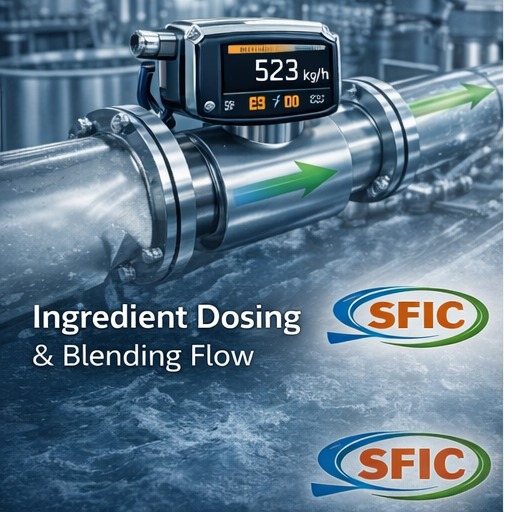
- Ingredient dosing
- Filling & packaging
- CIP (Clean-in-Place) and SIP (Sterilization-in-Place) operations
Flow meters must therefore deliver:
- High accuracy
- Hygienic construction
- Easy cleaning
- Stability under varying temperatures
- Long-term reliability
Enquire Now
2. Challenges in Food & Beverage Flow Measurement
Food processing involves unique challenges:
- Hygienic design mandatory
Pipelines and equipment must prevent bacterial growth.
- Frequent CIP/SIP cycles
Flow meters must withstand high heat, steam, detergents, and pressure fluctuations.
- High viscosity products
Items like chocolate, sauces, syrup, and cream need precision measurement.
- Sensitive and conductive liquids
Beverages and milk require sanitary-grade measuring technology.
- Temperature-sensitive fluids
Pasteurization and cooking require meters that remain accurate even with temperature rise.
- Strict quality and regulatory standards
Food safety compliance is non-negotiable.
Saitechflow meters are engineered to solve these challenges.
3. Recommended Flow Meter Types for Food & Beverage Industry
The F&B sector typically uses three types of advanced flow meters:
A. Electromagnetic Flow Meter (Hygienic/Sanitary Type)
Ideal for:
Milk, juices, beverages, water, sugar syrup, chocolate milk, sauces, whey, brine, flavored drinks.
Electromagnetic flow meters (magmeters) are the most popular type in the F&B industry due to:
- No contact with moving parts
- Extremely accurate measurement
- Tri-clamp hygienic connections
- SS316L construction
- PTFE/PFA food-grade liners
- Zero pressure drop
Recommended Applications
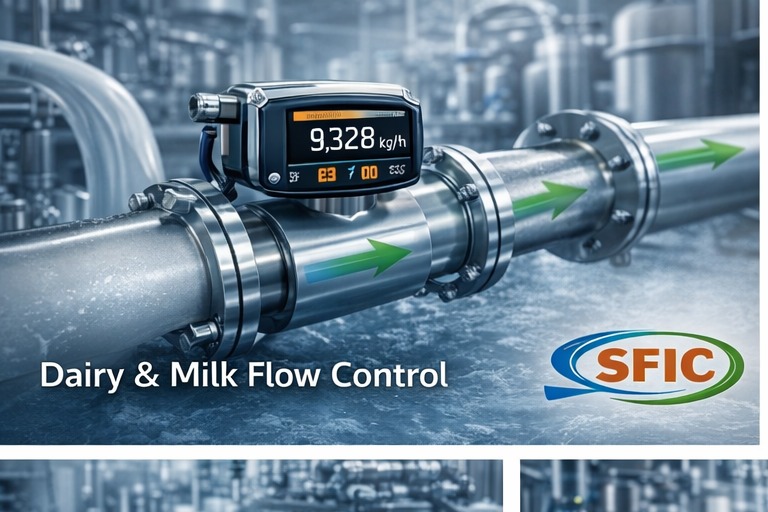
- Milk and beverage transfer lines
- Pasteurizers
- Mixing and batching
- Syrup and sugar solution measurement
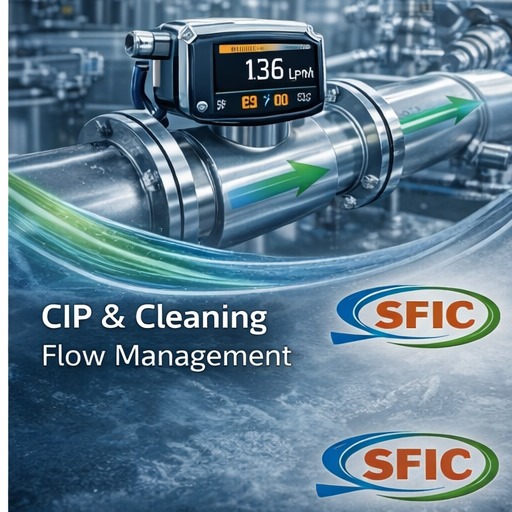
- CIP solution metering
- Water supply for ingredient mixing
- Brine and whey flow monitoring
Magmeters also tolerate suspended solids, making them ideal for pulpy beverages.
B. Coriolis Mass Flow Meter
Ideal for:
Edible oils, viscous liquids, chocolate, cream, concentrated juices, honey, syrups.
Coriolis meters measure:
- Mass flow
- Density
- Temperature
- Viscosity correlation
They offer the highest accuracy in the food industry.
Applications
- Recipe control
- Standardization of edible oils
- Sugar syrup production
- Chocolate dosing
- Flavors and concentrates
- Online density measurement for beverages
C. Turbine Flow Meter (Sanitary Type)
Ideal for:
Water, beer, soft drinks, RO water, carbonated beverages.
Cost-effective solution where ultra-high accuracy is not required.
4. Applications Across the Food & Beverage Industry
1. Dairy Processing
- Milk pasteurization
- Cream separation
- Butter and ghee processing
- Flavored milk production
- Yogurt and curd batching
2. Beverage Production
- Carbonated and non-carbonated drinks
- Juices and pulp-based beverages
- Energy drinks
- Bottling and filling lines
- Flavor dosing
3. Edible Oil Industry
- Crude and refined oil flow
- Packaging lines
- Oil blending
- Quality standardization
4. Confectionery & Chocolates
- Liquid chocolate measurement
- Glucose syrup flow
- Caramel and fudge processing
5. Brewery & Alcohol Industry
- Beer wort flow
- Fermentation control
- Distilled spirits
- Bottling and kegging
6. Sauce & Condiment Manufacturing
- Ketchup
- Mayonnaise
- Chocolate syrups
- Vinegar
- Soy sauce
- Salad dressings
7. Frozen Food & Ready-to-Eat (RTE)
- Soup bases
- Gravies
- Liquid marinades
- Vegetable wash water
8. CIP/SIP Process Monitoring
- Cleaning solution flow
- Water rinse cycles
- Online sanitation verification
5. Key Features of Saitechflow Flow Meters for Food & Beverage
Saitechflow meters are built to meet the stringent needs of the F&B market.
✔ Hygienic SS316L construction
Fully sanitary-grade stainless steel for product-contact surfaces.
✔ Tri-Clamp / SMS / DIN fittings
Ensures easy removal, cleaning, and maintenance.
✔ Food-grade liners and seals
PTFE / PFA / EPDM compliant with FDA guidelines.
✔ Withstands CIP/SIP cycles
High-temperature and chemical-resistant built.
✔ High accuracy and repeatability
Ideal for recipe consistency and quality control.
✔ Smooth, crevice-free internal surface
Prevents bacterial growth and cross contamination.
✔ Works with pulpy & viscous liquids
Maintains stable measurement.
✔ SCADA/PLC connectivity
Outputs include:
- 4–20 mA
- RS485 Modbus
- Pulse / frequency
- HART (optional)
✔ Custom calibration available
For dairy, edible oil, and beverage processors.
6. Smart Flow Measurement & Automation
Saitechflow meters support Industry 4.0 automation with optional add-ons:
- Data logging
- Wireless GPRS/4G monitoring
- Cloud dashboard
- Batch control systems
- Recipe automation
This helps F&B factories achieve:
- Traceability
- Reduced wastage
- Real-time monitoring
- Centralized control
- Regulatory compliance
7. Installation Points in F&B Processing Plants
Flow meters can be installed at:
✔ Raw milk/juice reception lines
To track incoming volume.
✔ Mixing and blending systems
To control recipe accuracy.
✔ Heat exchangers & pasteurizers
To maintain required flow rate for thermal treatment.
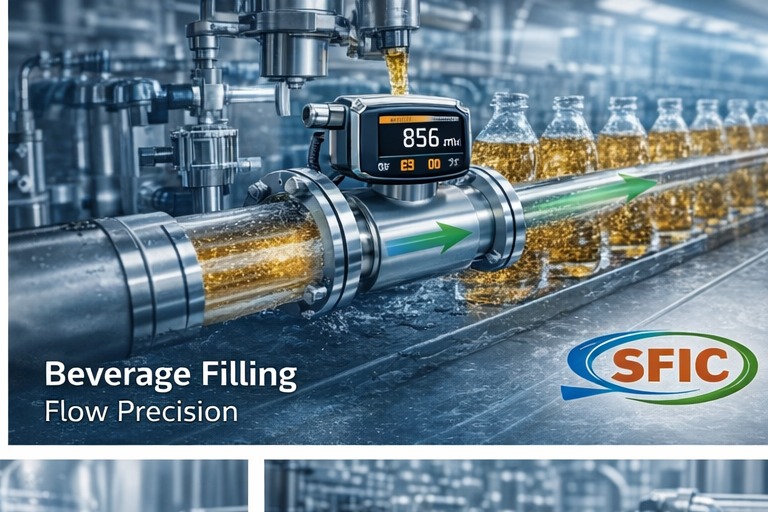
✔ Filling & packaging lines
To ensure correct bottle/can volume.
✔ CIP/SIP lines
To measure cleaning solution consumption.
✔ Water treatment plant
RO water, soft water, DM water used in beverage production.
8. Why Choose Saitechflow for Food & Beverage Flow Measurement?
- Specialized Hygienic Products
Our flow meters meet strict sanitary standards required for food environments.
- High Accuracy for Recipes & Batching
Ensures consistent taste, texture, and product quality.
- Resistant to Corrosion & High Temperatures
Perfect for dairy, beverage, and CIP systems.
- Trusted by Top Food Brands
Many dairies, edible oil manufacturers, and beverage companies use SFIC meters.
- Strong Technical Support & AMC
Installation, calibration, and service support across India.
Conclusion
The food and beverage industry requires precision, hygiene, and consistency in every process. Saitechflow Instruments & Control provides high-quality, food-grade electromagnetic and mass flow meters engineered to meet the demanding requirements of modern food processing. With hygienic materials, advanced software, high accuracy, and compatibility with CIP/SIP systems, SFIC meters ensure reliable measurement for dairy plants, beverage factories, edible oil refineries, breweries, confectionery units, and more.
By adopting Saitechflow flow meters, companies improve product quality, reduce wastage, enhance operational efficiency, and maintain global food safety standards.